
Beyond the Algorithm: Why San Francisco Executives are Trading Data for Human Intuition

San Francisco Executive Dating
Here's the irony: San Francisco: the city that literally invented the algorithm: is finally admitting that you can't code your way to a soulmate.
The same executives who spend their days optimizing user experience, building predictive models, and obsessing over conversion rates are discovering something uncomfortable: their dating lives can't be solved with a spreadsheet. And after years of swiping through algorithm-generated matches that look perfect on paper but feel empty in person, they're making a shift.
They're trading data for human intuition. And honestly? It's about time.
The Optimization Trap: Why You Can't A/B Test Your Way to Love
You know the drill. You're a VP at a SoMa startup. You've optimized everything in your life: your morning routine, your productivity stack, your investment portfolio. You approach problems systematically. You trust data.
So naturally, when it comes to dating, you download the apps. You write a killer bio. You use high-quality photos. You swipe strategically. You're treating this like a project you can optimize your way through.
Here's the problem: Romance isn't a conversion funnel.
The dating apps promise you algorithmic precision: "We've analyzed 10,000 data points to find your perfect match!" But walk through any Marina coffee shop on a Saturday morning and you'll see the result: a parade of first dates between people who matched on 12 shared interests but have zero actual chemistry.
The algorithm can tell you that you both love hiking and prefer IPAs over pilsners. What it can't tell you is whether his sense of humor will make your Tuesday mornings better, or whether her ambition matches your drive in a way that's complementary rather than competitive.
You can't A/B test connection. You can't optimize chemistry. And you absolutely cannot data-model compatibility.
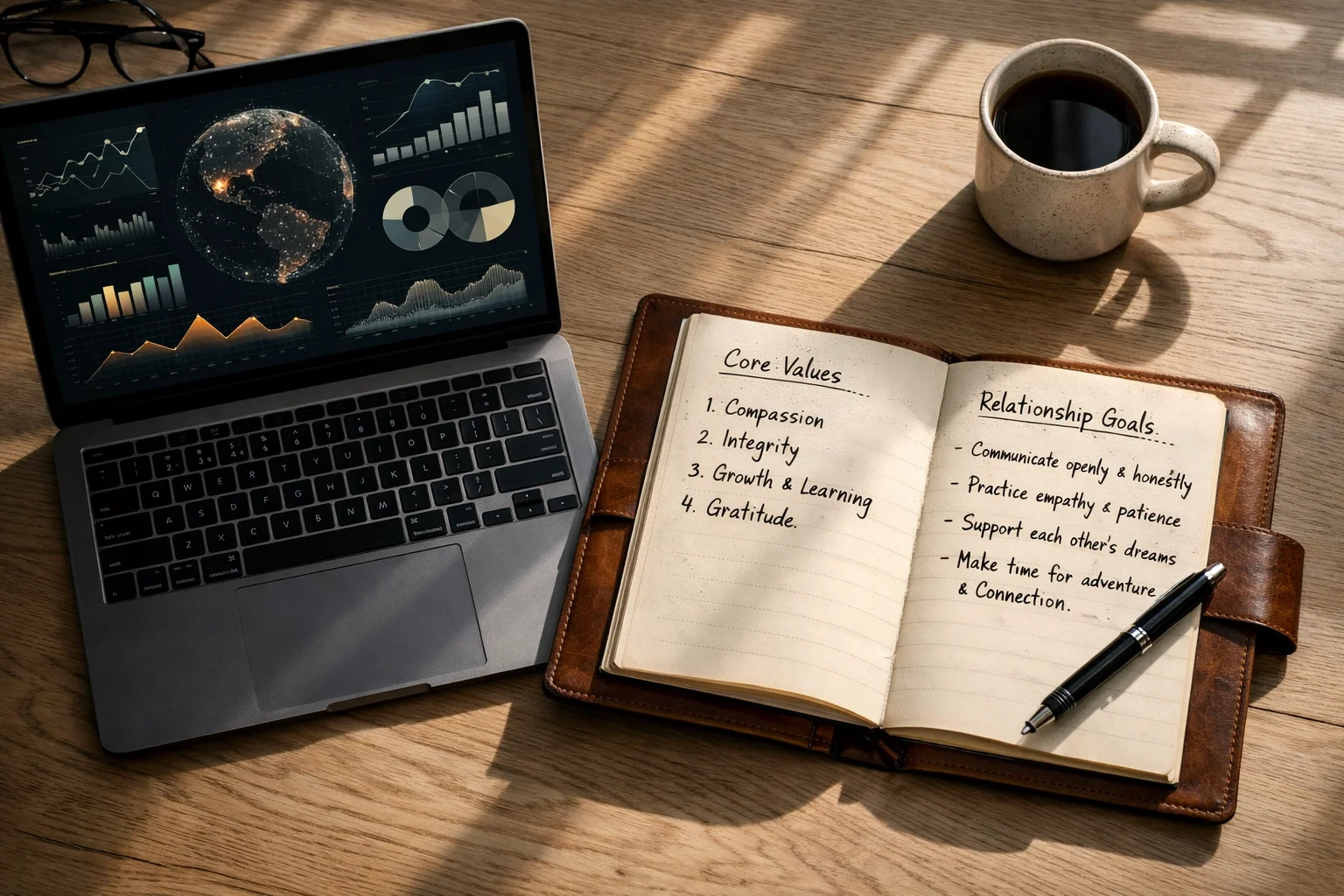
Why Algorithms Miss the Whole Human
As a professional matchmaker working with San Francisco's most successful professionals, I've seen this pattern repeatedly: High-level executives come to us after months (sometimes years) of algorithmic dating, completely exhausted.
They'll say something like: "I've been on 40 first dates in the past six months. On paper, these people were all great matches. But there was just... nothing there."
Here's what's happening: Dating algorithms optimize for similarity, not compatibility.
The difference matters enormously. An algorithm sees that you both went to Stanford, work in tech, and enjoy skiing. Great! Match made. But it misses:
How you each define ambition and whether those definitions clash or complement
Your attachment styles and whether they create security or trigger anxiety
Whether your life timelines are actually aligned (you want kids in two years; he's thinking maybe in ten)
The subtlety of attraction: does his conversational style engage you or exhaust you?
Whether your values systems are genuinely compatible beyond surface-level shared interests
An algorithm can't assess the whole human. It can't read between the lines of someone's profile to understand their emotional availability. It can't gauge whether someone's "laid-back" actually means "passive" or genuinely "easygoing in a healthy way."
Human matchmakers can. Because we're not just matching data points: we're matching humans.
What Human-Led Matchmaking Actually Does (That Apps Don't)
When you work with QUALITY, you're not getting fed through an algorithm. You're getting something far more valuable: personalized human judgment backed by years of relationship psychology expertise.
Here's what that looks like in practice:
Deep Psychological Profiling
We spend hours getting to know you: not just your hobbies and job title, but your attachment style, your family dynamics, your relationship patterns, your actual emotional needs. We understand what you think you want versus what will actually make you happy long-term.
Contextual Understanding
We know that when a Pacific Heights executive says she wants someone "ambitious," she might actually need someone secure enough to not compete with her success. We read between the lines. Algorithms can't do that.
Proactive Vetting
Before you ever meet someone we've matched you with, we've already had extensive conversations with them. We've assessed their emotional readiness. We've confirmed their intentions align with yours. We've verified they're genuinely single and actually looking for what they say they're looking for. The algorithm just shows you whoever swiped right.
Strategic Timing
We consider where you both are in your lives right now. Not five years ago. Not where you hope to be eventually. Right now. Because timing is everything in relationships, and an algorithm doesn't understand that the "perfect match" six months ago might be completely wrong today.
Continuous Calibration
After every introduction, we're getting feedback and refining our understanding of what actually works for you. We're learning from what didn't click and why. We're adjusting. An app just keeps serving you more of the same based on static preferences you set months ago.

The Real Cost of Algorithmic Dating
Let's talk about what you're actually spending when you rely on apps:
Time Investment
Average of 90 minutes per week swiping: 78 hours per year
One hour per first date × 30-40 dates: 30-40 hours per year
Emotional recovery time from bad dates: Immeasurable but significant
Mental Energy
Decision fatigue from endless options
Emotional whiplash from rapid-fire first dates
The psychological toll of commodification
Burnout from treating dating like a second job
Opportunity Cost
Missing out on quality matches because you're exhausted from quantity
Developing cynicism that affects your ability to be open when the right person does show up
Time you could be spending building a relationship instead of endlessly searching for one
When you're a Menlo Park executive pulling $500K+ annually, your time is worth somewhere between $250-500 per hour. That means you're spending $19,500-$39,000 per year just in time costs swiping through apps.
And you're still single.
The Luxury of Time: What SF Singles Actually Value
Here's what successful San Francisco professionals eventually realize: The real luxury isn't having more options. It's having the right option, faster.
You didn't get where you are by doing everything yourself. You have an executive assistant because delegation creates efficiency. You have a financial advisor because expertise matters. You have a personal trainer because results require specialization.
Why would finding your life partner: arguably the most important decision you'll ever make: be any different?
Professional matchmaking is the ultimate life-hack for the time-poor, intention-rich San Francisco elite. It's not about outsourcing your love life. It's about bringing expertise and efficiency to the one area where you've been grinding without results.
You're not paying for someone to find you dates. You're paying for:
Quality over quantity: Three highly curated matches versus 100 mediocre swipes
Accountability: Someone who will tell you when you're self-sabotaging or being unrealistic
Privacy: No digital footprint, no public profile, no awkward run-ins with colleagues
Strategic advantage: Access to high-caliber people who aren't on the apps
Time compression: Months or years of trial-and-error condensed into a streamlined process

The Human Element: Why Intuition Beats Data
There's a reason why the most successful VCs in the Valley talk about "gut feeling" despite all their data analysis. There's a reason why the best product leaders say "metrics can't tell you everything" despite working in data-driven cultures.
Because at the end of the day, human intuition can see patterns that algorithms can't.
A skilled matchmaker knows that the Stanford MBA with the perfect credentials might have an avoidant attachment style that will drive you crazy. We know that the founder with the slightly messy profile might have the emotional intelligence and communication skills you actually need.
We can sense when someone is ready for a real relationship versus just going through the motions. We can tell the difference between "she's intimidating" (which means he's insecure) and "she's impressive" (which means he's secure enough to appreciate you).
This is the sophistication that algorithms will never achieve. Not because the technology isn't advanced enough, but because human compatibility is fundamentally about nuance, context, timing, and emotional intelligence: none of which can be reduced to data points.
The Bottom Line
If you're reading this from your Pac Heights apartment or your Palo Alto home office, and you've been spinning your wheels on the apps for months (or years), here's your permission slip: Stop optimizing. Start connecting.
The irony of San Francisco is that we've built an entire industry around making everything more efficient, faster, smarter: and then applied that same logic to the one area where it actively works against us. Romance isn't a problem to be solved with better data. It's a human experience that requires human judgment.
You trust experts in every other area of your life. Your love life deserves the same level of intentionality and expertise. Maybe it's time to trade the algorithm for human intuition and see what actual compatibility: not just data similarity: actually feels like.
Because at the end of the day, the person you build a life with won't be the one who matched your profile answers. It'll be the one who matches your actual human complexity. And that requires more than code can deliver.
Melissa Rosen is the COO of QUALITY, a professional matchmaking and relationship coaching service helping intentional professionals find authentic connection. If you're ready to move beyond the algorithm, let's talk.
Ready to stop leaving your love life to chance? Apply to join the Quality Network here.